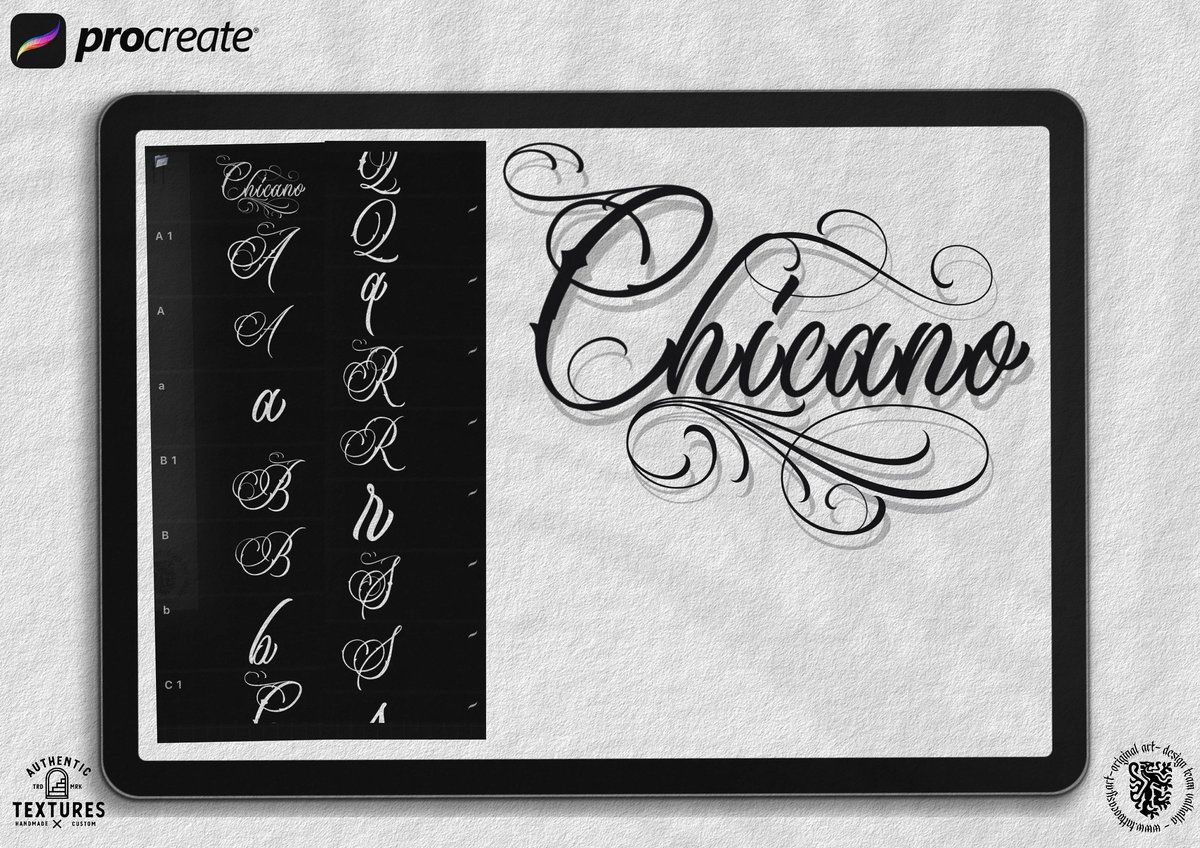
Step onto the vibrant streets where culture and art collide, and you’re bound to encounter a distinctive visual language that speaks volumes: Chicano lettering. More than just a collection of fonts or typefaces, this style is a powerful, hand-drawn narrative, born from the heart of Chicano communities in the 1940s and 1950s. It’s a bold, often ornate, and undeniably eye-catching form of artistic expression that has transcended its origins to influence everything from high fashion to global brand identities.
This isn't merely about aesthetics; it’s about history, resilience, and a proud cultural identity etched into every exaggerated serif and intricate stroke. Understanding Chicano lettering means appreciating its roots in urban art, graffiti, and tattoo culture, recognizing it as a living testament to a rich heritage.
At a Glance: What You'll Discover About Chicano Lettering
- Cultural Roots: Learn how this distinctive typography emerged from Chicano culture in the mid-20th century.
- Defining Features: Understand the hallmarks of the style, from bold strokes and ornate details to a unique blend of script and block letters.
- Versatile Applications: Explore its wide use in tattoos, graffiti, posters, branding, and beyond.
- Design Principles: Get practical tips for incorporating Chicano fonts into your projects for maximum impact.
- Crafting Your Own: Insights into designing custom Chicano lettering, embracing its hand-drawn spirit.
- Ethical Use: Navigate common questions about cultural appreciation vs. appropriation.
More Than Just Letters: Unpacking Chicano Lettering's Soul
Chicano lettering isn't something you simply download; it's a craft steeped in narrative. Each curve and flourish carries a weight of cultural significance, acting as a visual ambassador for a community's journey. It's a style that demands attention, reflecting the strong, often defiant voice of its creators.
Roots in Rebellion and Resilience
To truly grasp Chicano lettering, we need to rewind to mid-20th century America. Emerging from working-class Chicano neighborhoods, particularly in the American Southwest and California, this style wasn't just decorative – it was communication. Amidst socio-economic challenges and a struggle for identity, Chicano youth found powerful outlets for self-expression on the streets, on their bodies, and on their vehicles.
This era saw the rise of lowrider culture, elaborate murals, and a burgeoning tattoo scene, all of which became fertile ground for this distinct lettering. It was a visual defiance, a reclamation of public space, and a way to etch one's identity and community pride into the urban landscape. The influences were eclectic, drawing from Old English scripts, religious iconography, prison art, and early graffiti, all fused into something uniquely Chicano.
The Visual Language: What Makes it "Chicano"?
When you look at a piece of Chicano lettering, you instantly recognize its signature elements. It's like seeing a familiar face in a crowd, even if you can't quite articulate why. Here's what makes it unmistakable:
- Boldness and Weight: These letters are rarely thin or delicate. They command presence, often featuring thick, heavy strokes that ground them firmly on the page or canvas.
- Ornate Elegance: While bold, they're not brutish. Intricate details, swirling serifs, and sometimes even small decorative elements (like tiny dots, stars, or flourishes) are woven into the letterforms, adding a touch of sophisticated flair.
- Exaggerated Serifs: Unlike the subtle feet of traditional typefaces, Chicano lettering often pushes serifs to their dramatic limits. They can be elongated, pointed, curved, or even take on abstract shapes, becoming integral parts of the letter's personality.
- Script Meets Block: You'll frequently see a dynamic interplay between flowing script elements and more structured, block-like letters. This blend creates a sense of movement and solidity, reflecting the duality often present in urban art. Some pieces lean heavily into the elegant, interconnected script, while others favor a more stoic, architectural block style.
- Hand-Drawn Imperfection: Authenticity is key. Even when digitized, the best Chicano fonts retain a human touch. This often means embracing slight imperfections, varying line weights, and an organic flow that machine-perfect fonts simply can’t replicate.
A Canvas of Culture: From Walls to Skin
The cultural significance of Chicano lettering is deeply intertwined with its primary canvases. Each medium tells a part of its story:
- Graffiti and Street Art: This is arguably where Chicano lettering found its rawest expression. Gang tags, memorials, and community messages were rendered with spray paint, often in elaborate, highly stylized forms that were both territorial and artistic. The need for speed and impact fostered a direct, powerful aesthetic.
- Tattoo Culture: The permanence of a tattoo lent itself perfectly to the deeply personal and symbolic nature of Chicano lettering. Names, dates, religious phrases, and powerful affirmations adorn skin, acting as personal declarations of identity and loyalty. This art form continues to be a cornerstone for many tattoo artists, with its intricate details offering endless possibilities for personalization.
- Lowrider Art: The customized cars of lowrider culture are mobile canvases. Hand-painted names, pinstriping, and elaborate murals often feature Chicano lettering, turning vehicles into rolling works of art that celebrate craftsmanship and cultural pride.
Why Chicano Fonts Resonate Today: Beyond Aesthetics
In a world saturated with digital design, Chicano lettering offers something rare: genuine character. Its appeal isn't just about looking cool; it's about making a statement, connecting with a powerful legacy, and standing out in a crowded visual landscape.
Authentic Storytelling
At its core, Chicano lettering is a storyteller. It's laden with rich history and meaning, carrying the echoes of generations. When you choose a Chicano typeface, you're not just picking a font; you're tapping into a narrative of resilience, community, and artistic ingenuity. This cultural significance adds an unparalleled depth to any project, whether it's a band logo or a community event poster. It signals authenticity and respect for a particular aesthetic tradition.
Unmatched Versatility for Impact
Despite its distinct style, Chicano lettering is surprisingly versatile. Its bold and eye-catching nature makes it ideal for applications where you need to grab attention and leave a lasting impression.
Think about the possibilities:
- Tattoos: The quintessential home for many Chicano lettering styles, offering endless customization for names, quotes, and meaningful symbols.
- Brand Logos: For businesses aiming for an edgy, authentic, or culturally connected identity, a Chicano-inspired logo can be incredibly powerful. Imagine a craft brewery, a barbershop, or a clothing line leveraging this aesthetic.
- Music Album Art: Especially for genres like hip-hop, metal, or Latin music, Chicano lettering can perfectly capture a raw, urban, or rebellious spirit.
- Movie Posters & Titles: To evoke a specific cultural setting, a sense of drama, or a streetwise edge.
- Event Flyers & Posters: For concerts, car shows, or cultural festivals, it immediately communicates a specific vibe and energy.
- Apparel Design: T-shirts, hoodies, and accessories featuring Chicano lettering instantly convey a sense of style and cultural awareness.
A Bold Statement That Demands Attention
In a visual world often dominated by minimalist design, Chicano lettering is a welcome rebellion. Its intricate designs and powerful strokes are inherently bold and eye-catching. This isn't background noise; it's a focal point. It injects energy and personality into any design, ensuring your message isn't just seen, but felt. It screams individuality in an era of homogenization.
Mastering the Art: Integrating Chicano Lettering into Your Designs
So, you're ready to infuse your projects with the unique power of Chicano lettering. Great! But like any powerful tool, it requires a thoughtful approach to truly shine. Here's how to make it work for you.
The Golden Rules for Impact
Chicano lettering is a star, not a supporting actor. Treat it as such:
- Headlines, Logos, and Titles are Its Stage: This is where Chicano lettering performs best. Its intricate details and bold forms are designed to be the main event, drawing the eye and making a strong initial impression. Use it for impactful brand names, album titles, prominent text on a poster, or a captivating header on a webpage.
- Avoid Body Text: Resist the urge to use these fonts for long blocks of text. Their ornate nature, while beautiful, significantly impacts readability at smaller sizes and in continuous paragraphs. Save your readers the strain; stick to clean, legible fonts for body copy.
- Less is Often More: While ornate, overwhelming a design with too many intricate elements can dilute its power. Let your Chicano lettering breathe and be the focal point, rather than competing with other busy elements.
Visual Harmony: Pairing with Purpose
To amplify the impact of Chicano lettering, pair it with visuals that echo its spirit and heritage. Think of it as building a cohesive visual story.
- Urban-Inspired Imagery: Embrace visuals that naturally complement the street art origins. Skulls, often rendered with intricate details; roses, symbolizing beauty and passion; and lowrider cars, representing craftsmanship and cultural pride, are classic choices. These elements aren't just decorative; they are deeply symbolic within Chicano art.
- Religious Iconography: Crosses, Sacred Hearts, and images of saints are often found alongside Chicano lettering, reflecting deep-seated spiritual and community values. When used respectfully, these elements add layers of meaning and tradition.
- Classic West Coast Motifs: Consider integrating elements like palm trees, vintage cars, or even stylistic representations of classic architecture from the Southwestern United States.
- Color Palettes: Often, Chicano lettering is paired with strong, contrasting colors, or subtle monochrome palettes that allow the intricate lines to stand out. Deep reds, golds, blacks, and whites are common.
Dynamic Layouts That Pop
Chicano lettering naturally lends itself to energetic and expressive layouts. Don't feel confined to rigid grids.
- Asymmetrical Balance: Experiment with layouts that don't rely on perfect symmetry. This can create a more organic, dynamic, and visually interesting composition, mirroring the freestyle nature of street art.
- Overlapping Elements: Allowing letters or design elements to subtly overlap can add depth and a sense of realism, making the design feel more tactile and integrated. Just ensure readability isn't compromised.
- Depth and Dimension: Think about shadows, outlines, and drop shadows to give your lettering a three-dimensional quality, making it appear to jump off the page. This technique, commonly seen in graffiti, enhances its bold presence.
When you're exploring different looks and want to quickly see how various styles might manifest, a digital tool can be an invaluable starting point. You can easily Use the Chicano lettering generator to mock up ideas and experiment with different letter combinations before diving into a full custom design. It's a fantastic way to visualize potential outcomes and refine your vision.
Crafting Your Own Legacy: Designing Authentic Chicano Lettering
While digital fonts offer convenience, there's a profound satisfaction in creating custom Chicano lettering. It allows you to inject your unique voice while honoring the tradition.
Dive Deep into Tradition
Before you even pick up a pencil (or stylus), immerse yourself.
- Study the Masters: Look at classic Chicano art, prison art, historical tattoo flash, and vintage lowrider culture. Pay attention to how different artists interpret the letterforms, the balance of boldness and intricacy, and the flow of the lines.
- Analyze Graffiti Styles: Examine different "hands" in graffiti from the West Coast, particularly those with a Chicano influence. Understand how letter anatomy is stretched, compressed, and stylized while remaining legible.
- Don't Copy, Understand: The goal isn't to perfectly replicate existing work but to internalize the principles behind the style so you can create something new and authentic. What makes a particular stroke feel "right"? How are serifs typically constructed?
Embrace the Hand-Drawn Spirit
The soul of Chicano lettering lies in its human touch.
- Start Analog: Even if your final output is digital, begin with pencil and paper. Sketching allows for a freedom and fluidity that's harder to achieve directly on a screen. Don't be afraid to make mistakes; that's part of the process.
- Embrace Imperfections: Perfect symmetry is not the goal. The slight variations in line weight, the subtle wobbles, and the organic flow are what give hand-drawn lettering its character and charm. These "imperfections" are actually signs of authenticity.
- Practice, Practice, Practice: Like any art form, mastery comes with repetition. Sketch individual letters, then words, then phrases. Experiment with different pens, brushes, and markers to understand how they interact with paper.
Infusing Cultural DNA
To truly make your lettering "Chicano," consider weaving in elements that resonate with the culture.
- Symbolic Imagery: Integrate elements like crosses (representing faith), roses (love, beauty, pain), or religious imagery in subtle or prominent ways. These add a layer of narrative and connection.
- Motifs and Patterns: Look at traditional Chicano art for patterns or motifs that can be incorporated into the negative space of letters or as decorative borders.
- Personalized Touches: If you're designing for yourself or a specific individual, think about their personal history or family symbols that can be respectfully integrated.
Tools of the Trade: Digital vs. Analog
Whether you prefer the tactile feel of paper or the precision of pixels, there's a workflow for you:
- Analog Essentials: Graphite pencils (2B to 6B), fine-point markers (Pigma Micron, Sharpie), brush pens (Pentel Brush Pen, Tombow Fudenosuke), good quality paper (smooth Bristol board or marker paper).
- Digital Powerhouses:
- Adobe Illustrator: Ideal for vectorizing hand-drawn sketches, allowing for crisp lines and scalability without loss of quality. Its pen tool is essential for tracing and refining.
- Procreate (iPad): Excellent for direct digital drawing, offering a wide array of brushes that can mimic traditional tools. It's intuitive and portable.
- Clip Studio Paint / Photoshop: Strong for initial sketching and adding textures, though vectorizing is generally better in Illustrator.
Common Questions & Misconceptions About Chicano Lettering
Navigating the nuances of culturally significant art forms can raise questions. Let's clarify some common points about Chicano lettering.
Is Chicano Lettering Only for Chicanos? (Cultural Appreciation vs. Appropriation)
This is a critical question. Chicano lettering originated within a specific cultural context, born from a community's unique experiences. While anyone can admire and learn from its aesthetic, using it responsibly requires appreciation, not appropriation.
- Appreciation: Learning about the history, respecting the origins, crediting the culture, and using the style in a way that honors its significance. This often involves collaborating with Chicano artists or creators, or ensuring your use is respectful and informed.
- Appropriation: Using the style without understanding or acknowledging its cultural roots, detaching it from its meaning, or using it in a way that stereotypes or exploits the culture.
As a general rule: if you are not part of the Chicano community, approach with humility, do your research, and prioritize genuine respect and understanding. Consider working with Chicano designers or consulting with cultural experts for sensitive projects.
Can I Use It in Corporate Branding?
Yes, but with careful consideration. Its bold, authentic nature can be incredibly effective for brands looking to convey:
- Authenticity and Heritage: Ideal for brands that want to communicate a deep-rooted, genuine connection to craftsmanship or a specific cultural aesthetic (e.g., custom car shops, heritage clothing lines).
- Edge and Rebellion: Perfect for brands targeting younger demographics or those that want to stand out with a confident, non-conformist attitude (e.g., skate brands, music labels).
- Community Connection: For businesses serving or directly connected to Chicano communities, it can be a powerful symbol of identity and belonging.
However, it may not be suitable for all corporate contexts, particularly those requiring a highly conservative or minimalist aesthetic. Always ensure the style aligns with your brand's values and target audience without feeling forced or inauthentic.
What's the Difference Between Chicano Lettering and Gothic Script?
While both styles often feature ornate details and heavy strokes, they have distinct origins and characteristics:
- Gothic Script (Blackletter): Originating in medieval Europe, Gothic scripts (like Fraktur or Textura) are characterized by dense, angular, and often broken letterforms. They were designed for manuscripts and early printing, reflecting a specific historical and religious context.
- Chicano Lettering: While drawing some inspiration from Old English and blackletter styles (especially in early tattoo art), Chicano lettering evolved independently with its own unique flourishes, exaggerated serifs, and a dynamic blend of script and block forms. Its roots are in 20th-century urban Chicano culture, not medieval Europe. It has a distinct "flow" and a specific set of symbolic associations not found in traditional Gothic scripts.
How Do I Choose the Right Chicano Font?
With many digital interpretations available, choosing the right one requires a discerning eye:
- Consider Your Message: Is it serious, celebratory, rebellious, or nostalgic? Look for fonts whose specific characteristics (e.g., more script-like vs. more blocky, more ornate vs. cleaner) align with your message's tone.
- Check for Authenticity: Does the font feel hand-drawn? Does it show a respect for the traditional elements? Be wary of overly digitized, sterile versions that lose the style's inherent soul.
- Readability at Size: Test the font at your intended display sizes (e.g., large for a headline, smaller for a subtitle). Ensure its intricacies don't make it illegible.
- Licensing: Always check the font's licensing terms, especially for commercial projects, to ensure you can use it legally.
- Test Drive: Most font sites allow you to type in custom text. Use this to see how your specific words or phrases look in the chosen font before committing.
Beyond the Surface: The Future and Impact of Chicano Typography
Chicano lettering is far from a static art form. It continues to evolve, adapting to new technologies and influences while holding firm to its roots. From digital artists pushing the boundaries with intricate animations to traditional tattooists refining their craft, the style remains a vibrant and essential part of contemporary visual culture.
Its enduring power lies in its ability to tell stories, to assert identity, and to beautify the everyday. As designers and cultural enthusiasts, our role is to continue to learn, respect, and thoughtfully apply this rich typographic tradition, ensuring its legacy thrives for generations to come. By doing so, we not only create stunning visuals but also contribute to a deeper appreciation of the art and history it represents.