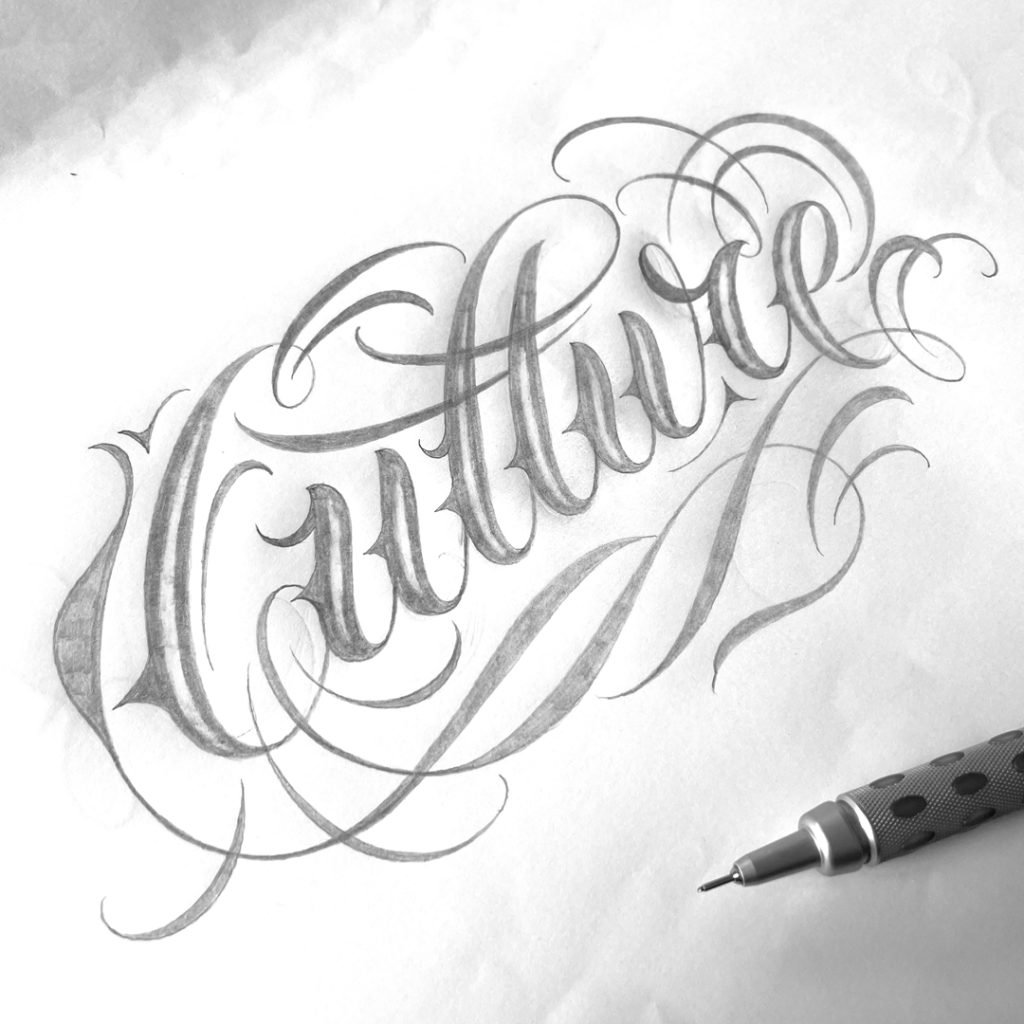
There’s something undeniably captivating about Chicano lettering. It’s more than just an aesthetic; it’s a living testament to culture, resilience, and identity, etched into the urban fabric. From the bold strokes adorning lowriders to the intricate script gracing a tattoo, this art form speaks volumes. But while many admire its power, fewer truly understand how to harness it, how to move beyond existing fonts and infuse a design with your own distinct voice.
This guide isn't just about admiring; it's about empowering you to take control. We'll delve deep into customizing your Chicano lettering designs, transforming them from static characters into dynamic, personalized statements. Get ready to embrace the pen, the brush, and the spirit of an art form that refuses to be confined.
At a glance: Your Journey into Custom Chicano Lettering
- Understanding the DNA: Learn the core characteristics that define authentic Chicano lettering, from exaggerated serifs to intricate details.
- Hand-Drawn First: Discover why starting with analog tools is crucial for capturing the style's organic feel.
- Cultural Infusion: See how to weave meaningful cultural elements like roses, crosses, and lowrider motifs into your letters.
- Beyond the Basics: Master techniques for adding shadows, outlines, and unique flourishes that elevate your design.
- Strategic Application: Learn where custom Chicano lettering shines brightest – and where to avoid using it.
- Digital Polish: Find out how to bring your hand-drawn creations into the digital realm for refinement and use.
- Common Mistakes: Identify pitfalls that can dilute authenticity or hinder legibility.
The Soul of the Street: What Makes Chicano Lettering Distinct?
Before you can truly customize, you need to understand the bedrock. Chicano lettering isn't just a font; it's a movement born from a specific time and place. Emerging from Chicano culture in the 1940s and 1950s, it rapidly evolved through urban art, graffiti, and tattoo parlors, becoming a visual shorthand for identity and pride.
What sets it apart? It’s a compelling blend of strength and intricate elegance. You’ll typically see:
- Bold, Ornate Designs: Each letter feels substantial, a piece of art in itself.
- Exaggerated Serifs: These aren't your average "feet" on letters; they sweep, curl, and extend with dramatic flair.
- Intricate Details: Think delicate swirls, filigree, and subtle embellishments that add depth without overwhelming.
- A Mix of Script and Block Lettering: Often, designs will juxtapose the rigid structure of block letters with the fluid grace of script, creating dynamic tension.
- Hand-Drawn Authenticity: Even in digital forms, the best Chicano lettering retains an organic, imperfect quality, reminiscent of its origins on walls, skin, and lowrider panels.
This style is inherently versatile, making it ideal for applications that demand both visual impact and rich cultural significance, from tattoos and graffiti to impactful posters and distinctive branding. While established options like CS Corpse – Chicano Graffiti Font and CS Rohan – Chicano Graffiti Font offer excellent starting points, learning to customize lets you break free from templates and craft something truly unique.
Why Go Custom? The Power of Personal Expression
In an age of endless digital fonts, why bother with the intricate process of customizing your Chicano lettering designs? The answer lies in authenticity and impact.
Firstly, pre-made fonts, however beautiful, carry a generic stamp. Customization allows you to inject personality, nuance, and a specific narrative into your work. It's the difference between wearing a tailored suit and an off-the-rack one – one fits perfectly, reflecting your unique contours.
Secondly, Chicano lettering is deeply rooted in individual expression and community identity. To truly honor its spirit, one must engage with the creative process that birthed it. Hand-drawn customization ensures your design isn't just inspired by the culture; it becomes a part of its ongoing artistic dialogue. It’s about creating something that truly resonates, whether it’s for a personal tattoo, a community mural, or a brand that seeks to embody a genuine street aesthetic.
Blueprinting Your Vision: Designing Your Own Chicano Lettering
This is where the rubber meets the road. Designing your own Chicano lettering is a journey of exploration, combining artistic technique with cultural immersion.
1. Dive Deep into Inspiration: The Wellspring of Authentic Style
You can't create in a vacuum. The first step in customizing your Chicano lettering designs is to steep yourself in its origins.
- Study Traditional Chicano Art and Graffiti: Look beyond just lettering. Explore murals, pinstriping, and historical artwork. Pay attention to line work, composition, and recurring motifs. This broader understanding will inform your letterforms. You’ll find a wealth of information in the rich history of Chicano art, which showcases diverse artistic expressions.
- Observe Real-World Applications: Analyze how Chicano lettering appears on lowrider cars, in tattoo studios (especially distinctive Chicano tattoo styles), and on street art. How do artists adapt the style to different surfaces and contexts?
- Incorporate Cultural Elements: This is key to authenticity. Think about imagery that holds significance: crosses, roses, calaveras (skulls), stylized hearts, suns, or even elements from the iconic lowrider culture itself. These aren't just decorations; they tell a story.
2. Embrace the Imperfect: The Beauty of the Hand-Drawn
Digital precision can be sterile. Chicano lettering, at its heart, is a hand-drawn art form.
- Start Analog: Grab a pencil, paper, and a fine-tip marker. Sketch, doodle, and experiment without fear of "mistakes." Imperfections are often what give custom Chicano lettering its organic, lived-in feel.
- Develop Your Hand: Practice strokes, curves, and flourishes. Don't aim for machine-like uniformity; instead, strive for a consistent style that reflects your individual hand. Think of it like learning to sign your name – it's unique, but recognizable.
3. Mastering the Basic Strokes and Forms
Every elaborate letter starts with fundamental shapes.
- Block Lettering Foundations: Begin with solid, sturdy block letters. Focus on creating thick, impactful letterforms. These will often serve as the structural backbone of your design.
- Tip: Start with simple, sans-serif blocks. Then, gradually thicken strokes, adding weight and presence.
- Script Lettering Flow: For script, focus on fluidity and connection. Letters should flow into one another gracefully, often with sweeping ascenders and descenders.
- Analogy: Think of it like a dancer – powerful yet graceful. Practice connecting letters smoothly, ensuring legibility without sacrificing elegance. Understanding the fundamentals of calligraphy can greatly aid in developing your script hand.
- Exaggerated Serifs: These are a hallmark. Instead of small feet, think dramatic extensions, hooks, or even flourishes that integrate into the letterform. Experiment with their length, curve, and thickness.
4. Adding Intricate Details and Flourishes
This is where your letters truly come alive and become custom.
- Shadows and Outlines: These add immense depth and dimension.
- Drop Shadows: Create the illusion that your letters are lifting off the page. Decide on a consistent light source and apply the shadow accordingly.
- Multiple Outlines: Layering thin and thick outlines can make letters pop and add a distinctive "tattoo" quality. Experiment with contrasting colors for outlines.
- Swirls and Filigree: Integrate delicate, decorative lines and curves within or around the letterforms. These should enhance, not distract. They often follow the natural contours of the letters.
- Beveling and 3D Effects: Give your letters a carved or sculpted appearance by adding highlights and shadows that suggest depth. This is particularly effective for block letters.
- Internal Details: Don't forget the negative space within letters. You can add small crosses, dots, or even tiny patterns inside the counters (the enclosed spaces).
5. Weaving in Cultural Symbolism
This step elevates your customized Chicano lettering from mere design to a cultural statement.
- Roses: Integrate thorny stems, blooming petals, or even a single rosebud within or alongside your letters. They symbolize beauty, love, and sometimes pain.
- Religious Imagery: Small crosses, praying hands, or subtle halos can be integrated respectfully, reflecting common iconography in Chicano art.
- Skulls/Calaveras: Stylized skulls can be incorporated as part of a letter's flourish, or as a background element, symbolizing remembrance and mortality with an artistic flair.
- Pinstriping Motifs: Borrow the clean, flowing lines and curves often found on lowriders to create elegant borders or accents around your lettering.
Refining Your Masterpiece: Tips for Professional-Grade Customization
Once you have your hand-drawn foundation, it's time to refine and apply your custom Chicano lettering designs with impact.
1. Strategic Pairing with Imagery
Chicano lettering rarely stands alone. It’s often part of a larger visual narrative.
- Bold, Urban-Inspired Imagery: As the ground truth suggests, pairing your custom lettering with powerful visuals like skulls, roses, or lowrider cars creates a cohesive and compelling design. Ensure the imagery's style matches the intensity and detail of your lettering.
- Contrast and Harmony: The imagery should complement the letters, not compete. If your lettering is highly ornate, perhaps simpler background elements allow it to shine.
2. Placement Matters: Headings, Logos, and Titles
Chicano lettering is a showstopper, not a wallflower.
- Headlines, Logos, and Titles: This is where custom Chicano lettering truly excels. Its boldness and intricate detail make it perfect for capturing attention. Think band logos, event posters, or distinctive brand identities.
- Avoid Body Text: Due to its ornate nature and potential for reduced legibility at smaller sizes, Chicano lettering is generally unsuitable for large blocks of body text. Reserve it for impactful statements.
3. Experiment with Layout and Composition
The arrangement of your custom letters can dramatically alter their effect.
- Asymmetrical Layouts: Break free from rigid grids. Chicano art often embraces dynamic, unbalanced compositions that feel more organic and energetic.
- Overlapping Elements: Allowing letters, or parts of letters, to overlap creates depth and a sense of movement. This can be particularly effective when combining script and block styles.
- Hierarchy: Decide which words or parts of your lettering should stand out most. Use size, thickness, and detail to guide the viewer's eye.
4. Analog to Digital: Bringing Your Art to Life
Even with a hand-drawn foundation, digitizing is crucial for wider application.
- Scan Your Drawings: High-resolution scanning is your friend. Ensure good lighting and a clean scan.
- Vectorization: Use software like Adobe Illustrator or Inkscape to trace your hand-drawn lines, converting them into scalable vector graphics. This preserves quality at any size.
- Refinement: Digital tools allow for precise adjustments to curves, line weights, and spacing that might be difficult to achieve perfectly by hand.
- Pro Tip: Don't over-perfect. Retain some of the "human touch" that makes hand-drawn Chicano lettering so special.
- Explore Generators (for inspiration): While the goal here is custom, sometimes seeing what a Chicano lettering generator can do can spark new ideas or provide a reference point for common stylistic elements. Just remember to always add your personal twist.
- Leveraging Digital Tools: For those comfortable with the transition, using powerful digital art tools like Procreate on an iPad or a drawing tablet with Photoshop can streamline the initial design process, offering layers and undo functions that make experimentation easier.
5. Seek Feedback and Iterate
Art is rarely perfect on the first try.
- Get Diverse Opinions: Share your designs with others – especially those familiar with Chicano art. A fresh pair of eyes can spot areas for improvement or potential misinterpretations.
- Refine and Re-draw: Be prepared to go back to the drawing board. Customization is an iterative process. Each revision brings you closer to your ideal design.
Pitfalls to Dodge: Maintaining Authenticity and Impact
As you embark on customizing your Chicano lettering designs, be aware of common missteps.
- Over-Complication: While intricacy is a hallmark, there's a fine line between rich detail and visual clutter. If your letters become illegible or overwhelming, you've gone too far. Simplicity can sometimes be more impactful.
- Losing Authenticity: Copying without understanding the roots can make your work feel hollow or superficial. Ensure your design choices are informed by genuine inspiration, not just aesthetic trends.
- Poor Legibility: The primary purpose of lettering is to convey a message. If people can't read your custom design, its impact is lost. Always test legibility, especially when combining script, embellishments, and shadows.
- Ignoring Cultural Sensitivity: Chicano lettering is culturally significant. If your design incorporates traditional elements, ensure you understand their meaning and use them respectfully. Avoid trivializing or misrepresenting the culture.
- Inconsistent Style: Ensure that all letters within a word or phrase maintain a consistent style, weight, and level of detail. A jarring mix of styles can undermine the professional look of your custom work.
Real-World Canvas: Where Custom Chicano Lettering Shines
The beauty of custom Chicano lettering lies in its versatility and visual power across various mediums:
- Tattoos: This is arguably one of the most iconic applications. A custom piece ensures personal significance and a unique aesthetic on the skin.
- Branding & Logos: Businesses seeking a bold, distinctive, and culturally resonant identity can leverage custom Chicano lettering for an unforgettable logo. Think barbershops, clothing lines, or artisanal craft businesses.
- Murals & Street Art: The large scale and public nature of murals make them a perfect canvas for custom, hand-drawn Chicano letterforms, reflecting community spirit.
- Posters & Flyers: For events, concerts, or political messages, custom lettering commands attention and conveys a specific tone.
- Apparel Design: T-shirts, hoodies, and hats come alive with unique Chicano lettering designs that speak to style and cultural pride.
- Personal Art Projects: From custom canvases to digital illustrations, your unique lettering can be the centerpiece of personal artistic endeavors.
Your Burning Questions, Answered
As you explore customizing your Chicano lettering designs, a few common queries often arise.
Q: What's the difference between Chicano lettering and gang calligraphy?
A: While both styles can share some visual overlap due to their urban origins and hand-drawn nature, Chicano lettering is a broader cultural art form that celebrates identity, history, and community. Gang calligraphy specifically refers to lettering used by gangs for territorial marking, identity, or communication, often carrying specific, sometimes illicit, meanings. It's crucial to approach Chicano lettering with respect for its cultural context and avoid mischaracterizing it solely as "gang script."
Q: Do I need to be a professional artist to customize Chicano lettering?
A: Absolutely not! While experience helps, the core of Chicano lettering is rooted in accessible tools – pen and paper. Anyone with patience, a willingness to practice, and an eye for detail can begin customizing their own designs. Start with simpler forms and gradually add complexity as your skills develop. The "hand-drawn" nature embraces a certain organic imperfection that even beginners can achieve.
Q: How can I practice Chicano lettering effectively?
A: Consistency is key. Start by tracing existing examples to understand letter construction. Then, move to freehand copying. Dedicate time each day to sketching individual letters, then words, focusing on consistency in stroke width, serifs, and spacing. Use different tools (pencils, markers, brushes) to get a feel for various line qualities. Don't be afraid to experiment and create practice sheets.
Q: What are good software tools for digitizing hand-drawn Chicano lettering?
A: For vectorization and refinement, Adobe Illustrator is the industry standard. Affinity Designer is an excellent, more affordable alternative. If you're working on an iPad, Procreate is fantastic for initial sketching and inking, which can then be exported for vectorization. For pixel-based work or adding texture, Adobe Photoshop or Clip Studio Paint are excellent choices.
Your Next Chapter: Crafting Your Legacy in Letter
Customizing your Chicano lettering designs is more than just learning a technique; it's about connecting with a vibrant cultural legacy and adding your unique voice to it. You’re not just drawing letters; you're etching stories, celebrating identity, and expressing yourself in a powerful, timeless medium.
Start small. Pick a single word that resonates with you. Sketch it out, embrace the hand-drawn imperfections, and slowly build up the layers of detail, shadow, and cultural symbolism. Don't rush the process. Let each stroke be deliberate, each flourish intentional. With practice, patience, and a deep appreciation for its roots, you’ll unlock a rich world of artistic expression and craft designs that are not only visually stunning but profoundly authentic. Go forth and create.